

A 6-week postpartum checkup is a chance to talk about physical recovery, mood, feeding, contraception, and health conditions affected by pregnancy. What your clinician examines or tests depends on your history and symptoms. Postpartum care may also include earlier or later follow-ups; call your clinic to confirm visit length and whether you may bring your baby.
What Happens at a 6-Week Postpartum Checkup
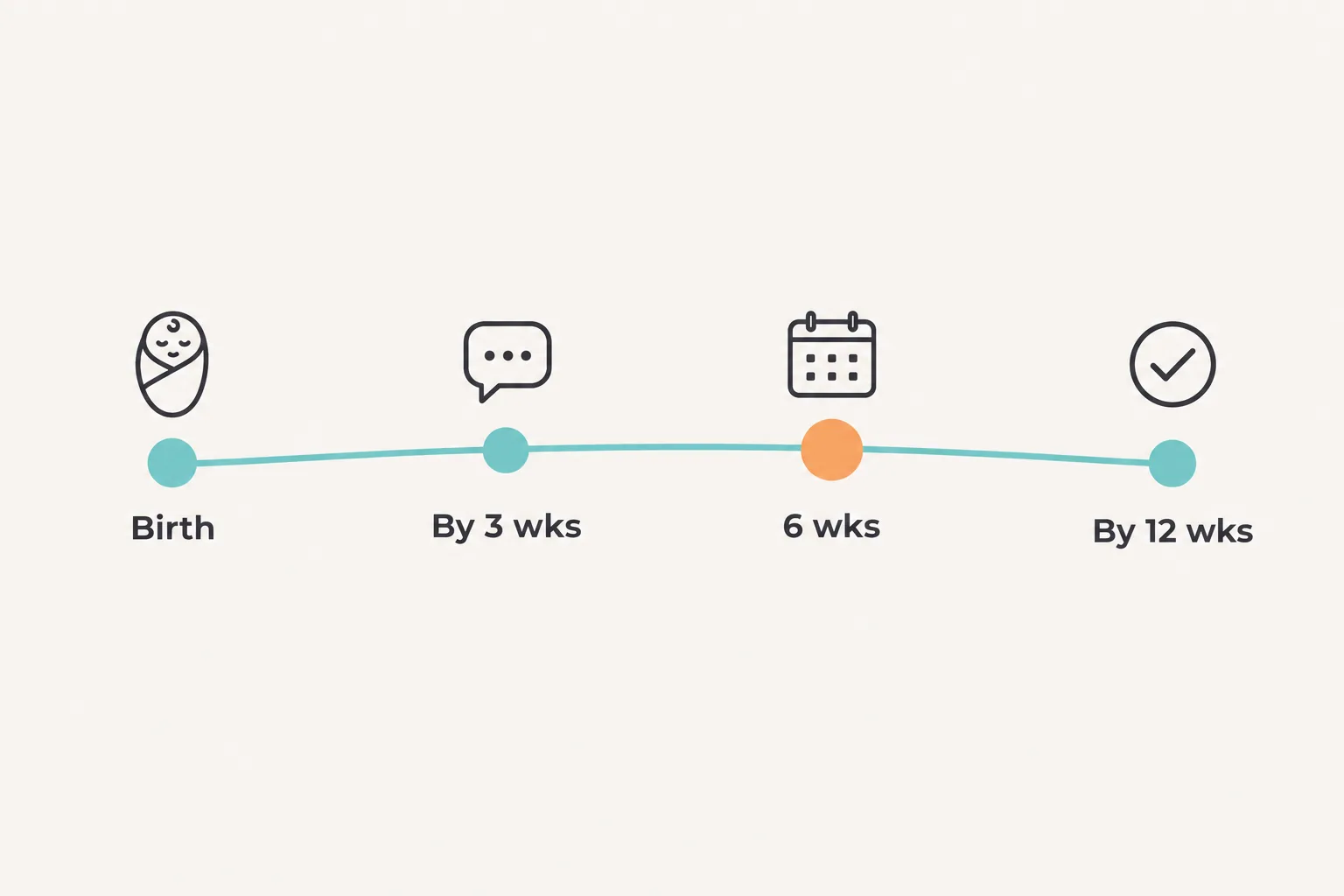
The visit gives you and your clinician time to review physical recovery, emotional health, feeding, contraception, and any health condition affected by pregnancy or birth. What is discussed, examined, or tested depends on your history and current concerns.
A six-week appointment is one point in postpartum care, not necessarily the only one. ACOG recommends contact with a clinician within the first three weeks and a comprehensive postpartum visit by 12 weeks. Read ACOG’s guidance on postpartum care.
Your appointment may be with an obstetrician, midwife, family physician, or another member of your care team. Appointment length, who you see, and whether your baby can come vary by clinic, so call ahead to confirm.
What Your Provider May Check
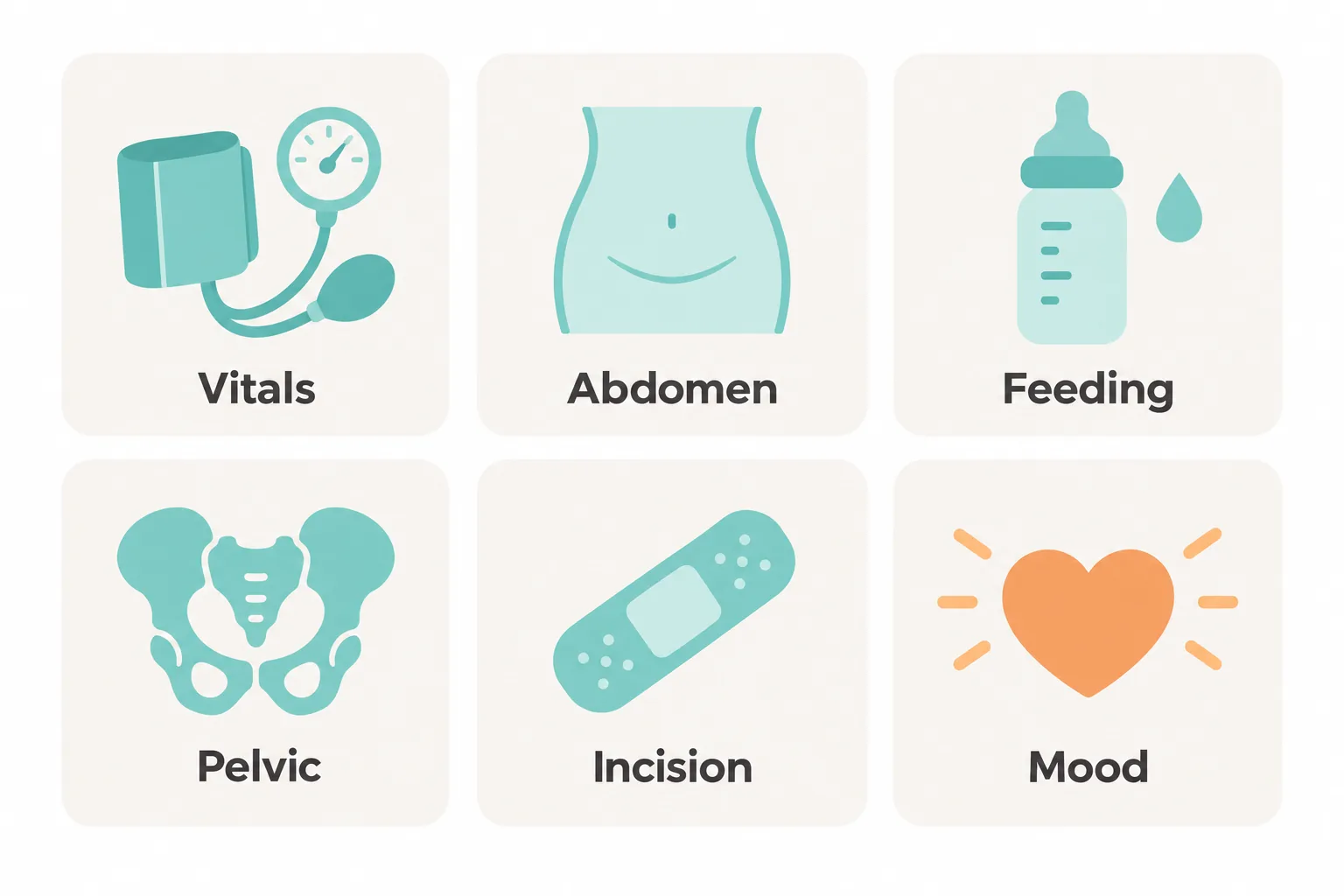
The exact exam is not the same for everyone. Your clinician may review symptoms and recovery, take vital signs, and recommend a physical or pelvic exam based on your circumstances. Ask what an exam will involve, and speak up if you feel uncomfortable or want the clinician to pause.
Vitals and weight
Your provider may check your blood pressure and other vital signs. Blood-pressure follow-up can be needed within six weeks after gestational hypertension or preeclampsia: ACOG recommends evaluation within 7–10 days after a hypertensive disorder of pregnancy, or within 72 hours for severe hypertension. Contact your care team about the schedule that applies to you. Weight may be recorded or discussed if it is relevant to your care; it is not a judgment about your recovery.
Abdomen and uterus
Depending on your symptoms and history, your clinician may examine your abdomen or discuss uterine recovery, pain, bleeding, and core strength. A specific maneuver to check for diastasis recti is not a guaranteed part of every visit. If you have abdominal pain, weakness, or a midline bulge, bring it up.
Breasts and feeding
Your clinician may ask how feeding is going and whether you have pain, latch concerns, supply questions, or other breast symptoms. A breast exam may be appropriate if you have a concern, but do not assume every patient receives one.
Pelvic exam, perineum, and stitches
A postpartum physical exam may include a pelvic exam. If you had a tear or episiotomy, your clinician may ask about discomfort and assess healing as appropriate. The exam may involve an external check and, when indicated, an internal exam. Ask what is planned before the exam begins, and let your provider know about tenderness or pain.
If you had a cesarean
Your clinician may ask how your incision is healing and whether you have pain, redness, drainage, or other concerns. The visit is also a good time to discuss recovery questions or future pregnancy plans that are important to you. If the incision opens or drains, or your pain is getting worse, contact a clinician promptly rather than waiting for a routine visit.
Mental Health Is a Real Part of the Visit
Postpartum care should include attention to emotional health. ACOG recommends screening for depression and anxiety during postpartum care, but the exact process may vary by clinic. If you have persistent sadness, anxiety, anger, numbness, panic, frightening intrusive thoughts, or difficulty sleeping even when you have the chance, tell your clinician. You can ask to speak privately if that would help.
Related readingWhat Happens at Your First Prenatal Appointment?Read the guide →By the time a mom walks into her 6-week postpartum appointment, her life has been completely rearranged. Some are coming out the other side. Most aren’t. And we …Read on LinkedIn ↗
A screening result is a starting point for a conversation, not a diagnosis on its own.
Symptoms can emerge after the checkup too. ACOG’s information on postpartum depression notes that it can occur up to a year after having a baby, so bring up new or worsening symptoms whenever they arise. If you may act on thoughts of harming yourself or your baby, seek urgent help.
Tests and Vaccines Depend on Your Health History
There is no single lab panel or vaccine set that applies to every postpartum patient. Your clinician may recommend tests or review vaccines based on pregnancy complications, symptoms, medical history, and what you have already received.
- If you had gestational diabetes, CDC recommends diabetes testing 4–12 weeks after birth. If the result is normal, follow-up testing every 1–3 years is recommended.
- Blood tests may be considered when your pregnancy or birth history, symptoms, or other health concerns make them appropriate. Ask what a recommended test is checking for and when you will receive the result.
- Your clinician may review whether you are due for vaccines. CDC says most vaccines do not affect the safety of breastfeeding, but which vaccines are recommended depends on your circumstances. Read CDC’s vaccine guidance for breastfeeding.
Do they do a Pap test at the six-week visit?
A Pap or HPV test is not automatically part of every postpartum visit. Cervical screening follows current guidance and your age, history, and previous results. Ask your clinician whether you are due and when you should schedule screening. See ACOG’s current cervical cancer screening guidance.
Birth Control and Pregnancy Spacing
You can ask about contraception even if your period has not returned. Ovulation can happen before the first postpartum period, so pregnancy may be possible before you notice menstrual bleeding again. Methods, timing, breastfeeding, and personal health factors all matter. ACOG’s postpartum birth-control guide explains options to discuss with your clinician.
If you are interested in an IUD or implant, ask the clinic whether it offers placement at or around your visit and whether you need to schedule it in advance. Do not assume a method or procedure is available at every appointment. You can also discuss pregnancy spacing and preconception care if you are thinking about another pregnancy.
Questions About Sex, Exercise, and Pelvic Floor Recovery
There is no universal six-week “green light” that guarantees everyone has healed enough for sex. Healing, comfort, and readiness vary. Ask your clinician about your own recovery, especially if you had a tear, episiotomy, cesarean birth, ongoing bleeding, or pain. ACOG says many OB-GYNs recommend waiting until six weeks after childbirth, while your own advice should reflect your recovery.
If you have vaginal dryness or pain with penetration, tell your clinician and ask about suitable options. If you are breastfeeding, discuss medication choices with your provider rather than assuming a particular treatment is right for you.
Mention urine leakage, urgency, difficulty controlling gas or stool, pelvic heaviness or bulging, or pain that limits daily activity. Your clinician can assess the concern and discuss whether pelvic-floor physical therapy or another referral is appropriate. Ask how to return to running, lifting, or core exercises based on your recovery. ACOG’s postpartum exercise guidance explains how to approach activity after birth.
What If Your Period Already Came Back?
Period timing varies after birth. Let your clinician know if bleeding is unusually heavy, restarts heavily after it had stopped, or concerns you. Heavy bleeding that soaks one or more pads in an hour is an urgent warning sign; see the warning-sign section below.
Preparing: What to Bring and What to Ask
A short written list can help you use the appointment well. Consider bringing:
- Your current medications and supplements
- Notes about bleeding, pain, headaches, vision changes, mood, or other symptoms
- Questions about feeding or newborn care
- Your contraception preferences and questions about method timing
- Questions about your birth or recovery that you want explained
- Any work, leave, or follow-up paperwork you need to discuss
Should you bring the baby?
Call the clinic ahead of time to ask whether your baby can attend and what the room setup allows. Do not assume that babies are permitted just because the appointment is postpartum.
Should your partner or a support person come?
A trusted support person may help you remember questions or take in information. You can also ask to speak privately for part of the visit. MWC says family or support people are allowed in most cases, but policies vary by hospital and location; check MWC’s FAQs or confirm the policy with the clinic.
What If You Miss the Six-Week Visit?
Contact your clinic and explain when you gave birth, any complications, and any symptoms you have now. The clinic can advise what follow-up is appropriate and whether you need an in-person appointment. Do not wait for a rescheduled routine visit if you have urgent warning signs.
Get Medical Care for Postpartum Warning Signs
CDC identifies urgent maternal warning signs that can occur during pregnancy or in the year after delivery. Seek immediate medical care for heavy bleeding that soaks one or more pads in an hour, a fever of 100.4°F or higher, a severe or worsening headache, vision changes, trouble breathing, chest pain or a fast-beating heart, or thoughts of harming yourself or your baby.
One-sided leg swelling or pain is also urgent, particularly during the first six weeks after birth. Review the full CDC list of urgent maternal warning signs. For breast symptoms or incision concerns, contact your clinician for advice on how soon you should be seen. If symptoms are severe or worsening, seek urgent care.
Frequently asked questions
Will I have a pelvic exam at my postpartum checkup?
Can I bring my baby to the appointment?
Can an IUD or implant be placed at the visit?
How MWC Supports Postpartum Care
MWC describes postpartum checkups focused on healing and recovery, with support for breastfeeding, newborn care, emotional-health screening, and contraception counseling. Learn about MWC’s postpartum care. To ask about scheduling, contact MWC.
This article provides general information about postpartum checkups. Your care plan should be based on your health history, symptoms, and guidance from your clinician.