

The group B strep test in pregnancy is a routine swab usually offered at 36–37 weeks. It checks for GBS bacteria in the vagina and rectum. A positive result usually means the bacteria are present without making you sick, and it helps your care team decide whether you need antibiotics during labor to reduce the risk of early-onset GBS disease in your newborn.
The swab is brief, and a positive result does not mean you or your baby is sick. Here’s when the test is done, what to expect, how long results can take, and what changes during labor.
What the group B strep test in pregnancy checks for
Group B strep (Streptococcus agalactiae) is a common bacterium that can live in the digestive tract, vagina, and rectum without causing symptoms. The prenatal test screens for colonization, which means the bacteria are present; it does not, by itself, diagnose an infection.
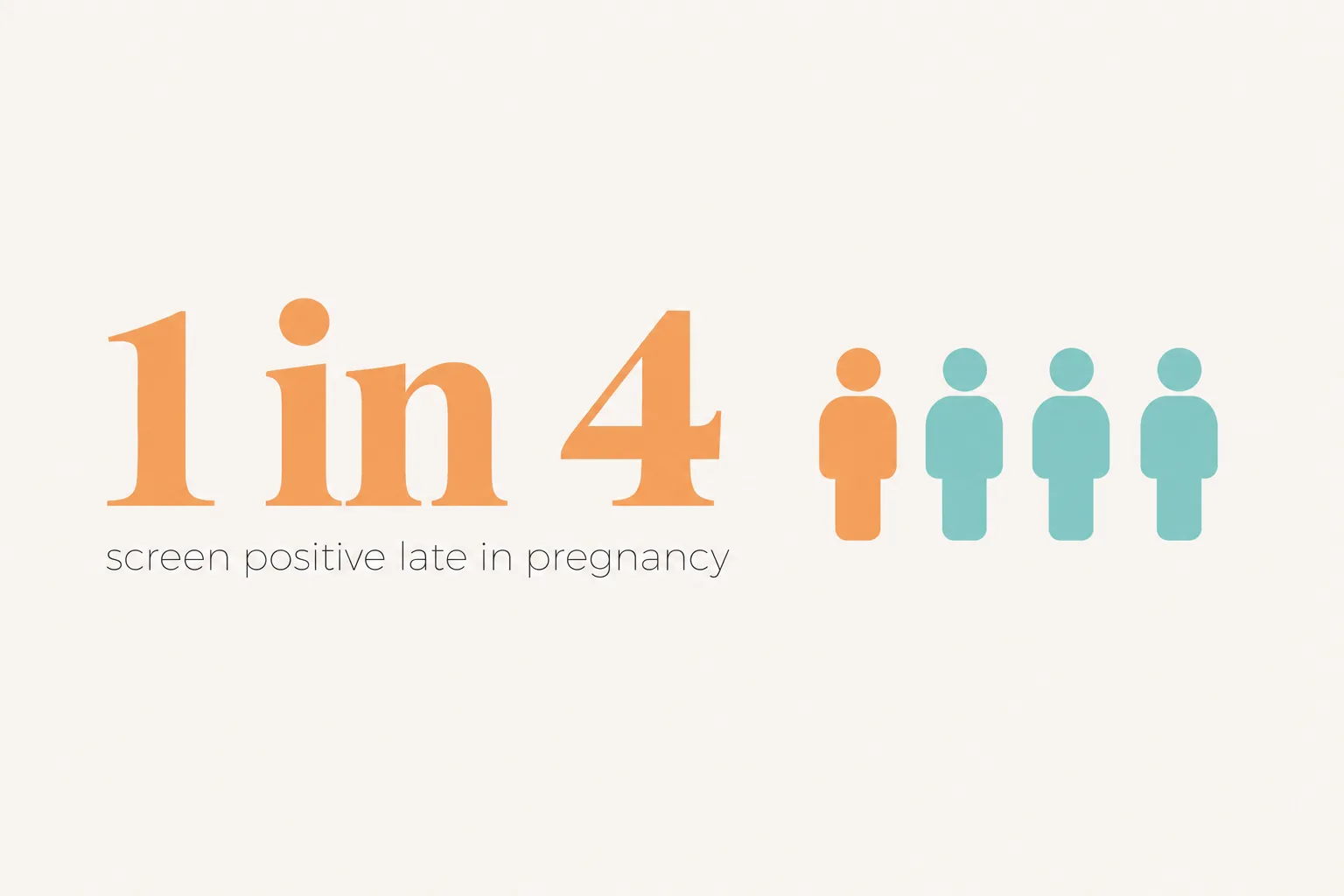
A positive result means the bacteria were detected. About 1 in 4 pregnant people screen positive near the end of pregnancy. You may hear this called a GBS swab, a strep B test, or GBS screening. A routine prenatal screen is usually a culture. GBS can pass to a newborn during birth, so the result helps the care team plan whether to give antibiotics during labor.
How you get group B strep
GBS is part of the normal bacteria found in the digestive tract and genital area. It can come and go over time, so someone may test positive in one pregnancy and negative in another. It is not caused by poor hygiene, diet, or anything you did or avoided during pregnancy.
GBS is not classified as a sexually transmitted infection. A positive screening result is not evidence of poor hygiene or a specific sexual exposure. ACOG explains GBS in pregnancy.
Strep B symptoms in pregnancy: usually none
Most people with GBS colonization notice no symptoms. That is why screening is offered routinely rather than only when symptoms appear.
GBS can also be found in a urine sample, sometimes without symptoms. Burning with urination, urgency, and frequent urination can occur with a urinary tract infection, but these symptoms are not specific to GBS.
Your provider can interpret the urine culture and decide whether treatment during pregnancy is needed. GBS found in urine also needs to be noted in the labor plan; depending on the result, a separate late-pregnancy swab may not be needed. See ACOG’s guidance on urinary tract infections during pregnancy.
When the GBS test is done in pregnancy
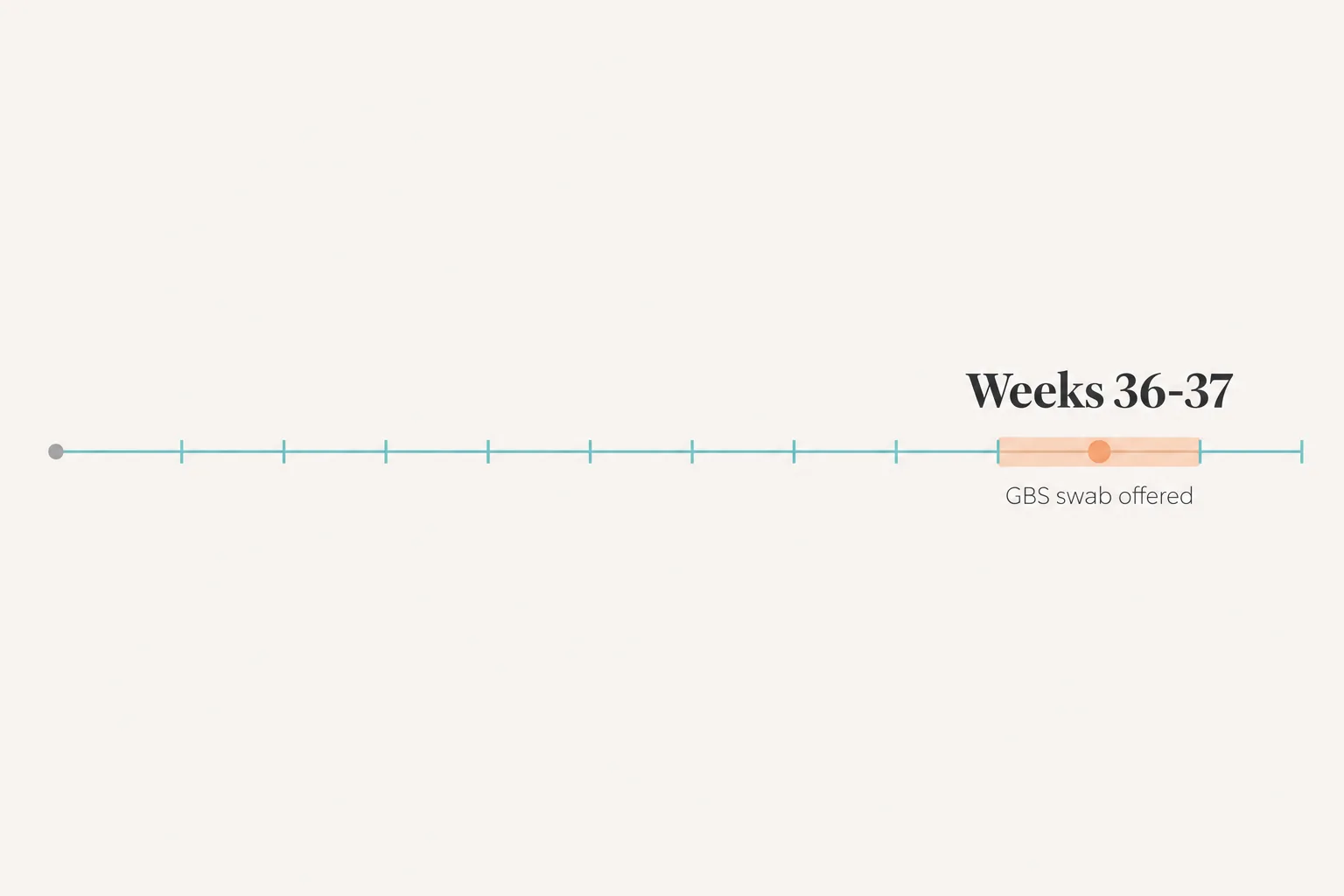
The American College of Obstetricians and Gynecologists (ACOG) recommends universal screening between 36 0/7 and 37 6/7 weeks of pregnancy. Some older patient materials may show a 35–37-week window, so ask your provider which week your clinic uses.
The timing helps the result reflect your GBS status closer to delivery. The swab is often part of a late third-trimester visit; see what to expect at a 36-week prenatal appointment.
If labor begins before screening or before results are available, tell the hospital team. They can use your gestational age, urine results, medical history, and labor factors to decide whether testing or antibiotics are appropriate. If you previously had a baby with GBS disease, tell your provider because antibiotics during labor are recommended regardless of the current swab result.
What happens during the swab
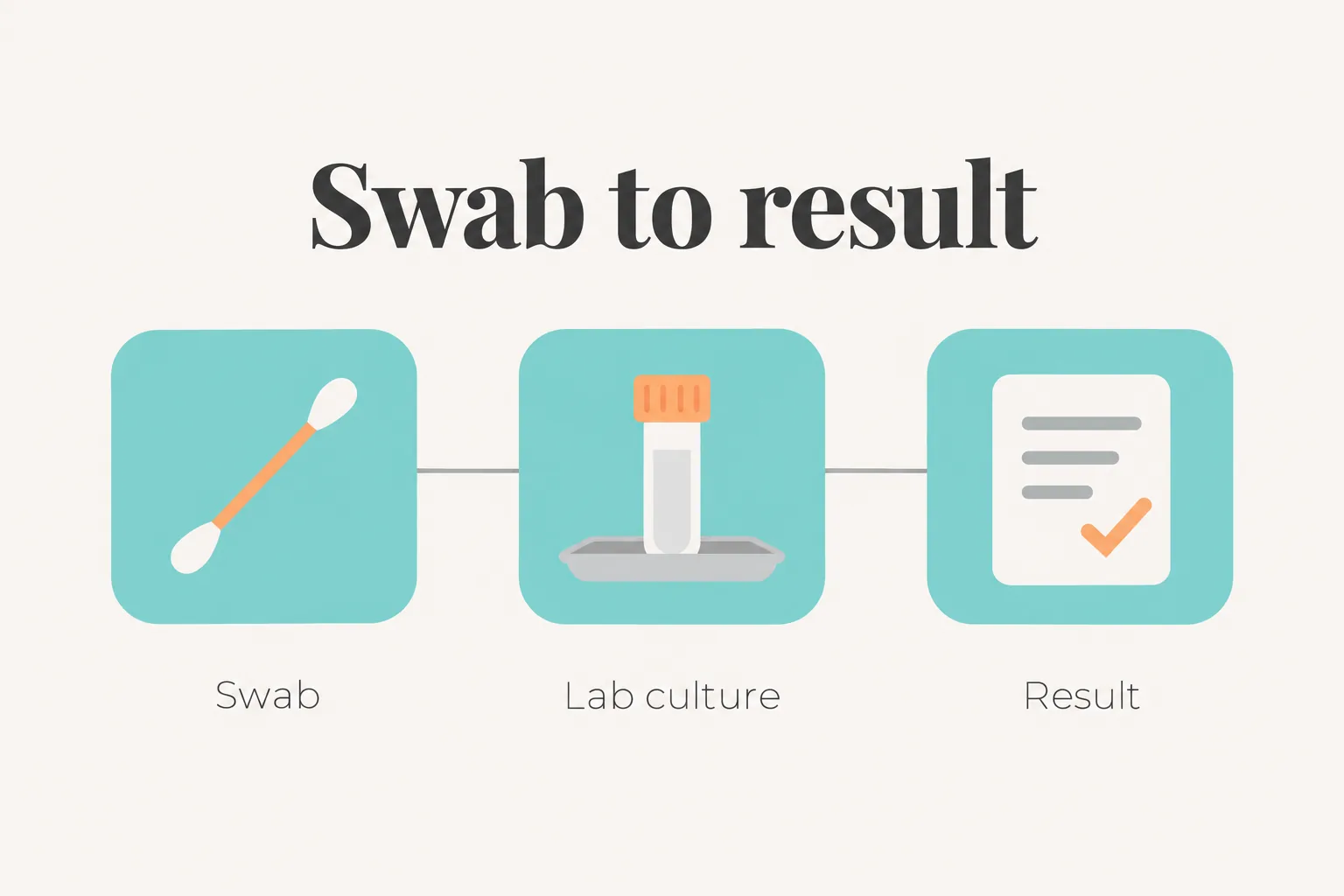
A clinician uses a cotton-tipped swab to collect a sample from the lower vagina and then the rectum. It usually takes less than a minute and may feel awkward, but it should not be painful. A speculum is generally not needed. Some clinics offer self-collection; ask your provider if that is an option.
No fasting or special preparation is usually needed, but follow any instructions from your clinic or laboratory. For more detail, read about the Strep B test and preparation.
Results: how long they take and what they mean
The routine prenatal screen is usually a culture: the lab checks whether GBS grows from the swab. Results often take a few days, although timing varies by laboratory. Ask your clinic how results will be shared and when to follow up if you have not heard back.
Negative means GBS was not detected in that sample. Positive means GBS was detected at the time of the test.
A positive swab alone usually does not mean you need antibiotics before labor; the usual plan is antibiotics during labor.
Rapid GBS PCR or NAAT when status is unknown in labor
Some hospitals can use a rapid molecular test, often called PCR or NAAT, when a person arrives in labor and their GBS status is unknown. Availability and protocols vary, and this is not a universal replacement for routine prenatal screening. If you have a penicillin allergy, tell your provider before the swab because the lab may need to check which antibiotics are appropriate.
What happens if you test positive for strep B in pregnancy
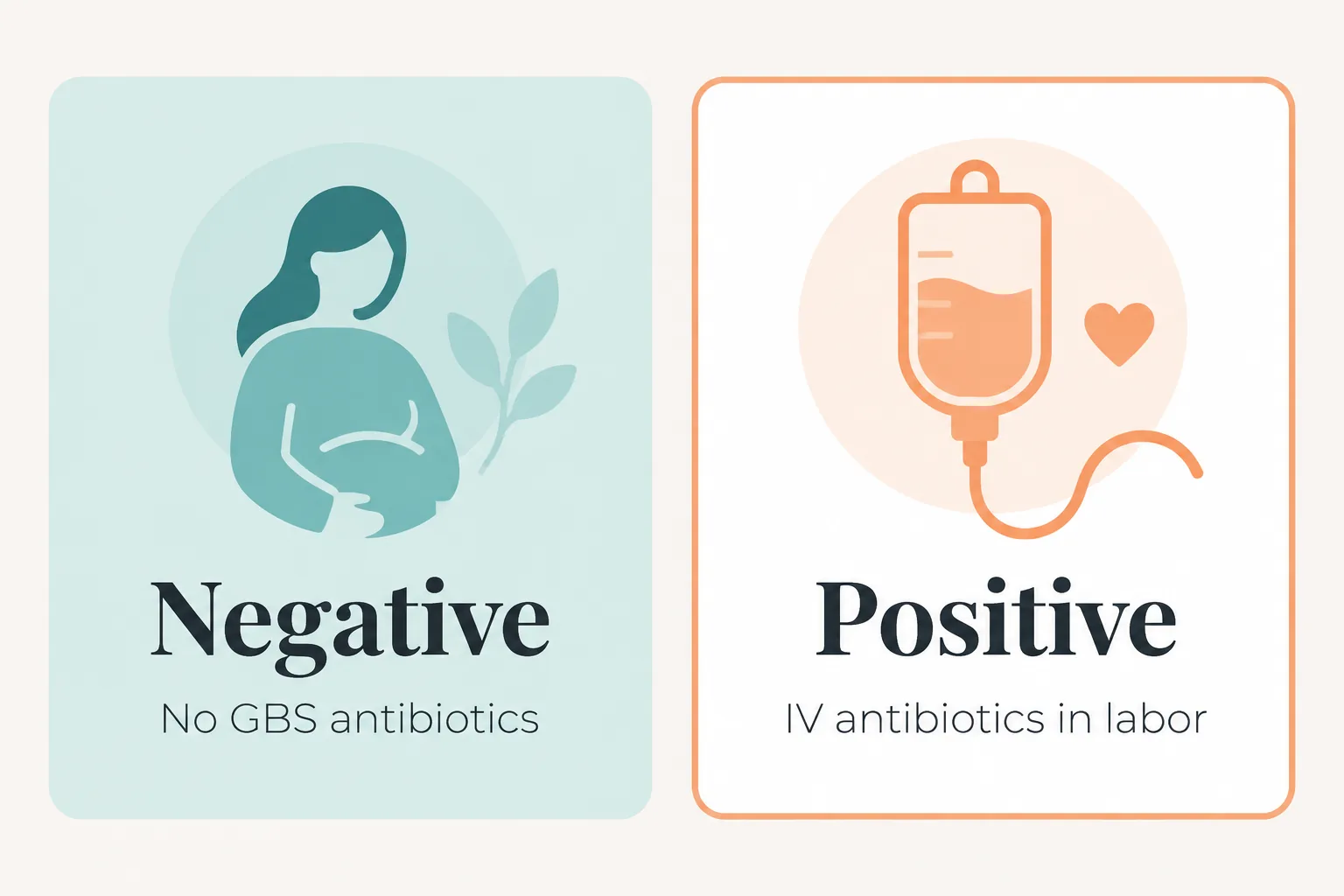
For a positive vaginal-rectal screen, the usual plan is intravenous (IV) antibiotics during labor. IV penicillin is commonly used; ampicillin is an alternative. If you have a penicillin allergy, the care team chooses an option based on your allergy history and, in some cases, the bacteria’s antibiotic sensitivity; options can include cefazolin, clindamycin, or vancomycin. Tell your provider about the allergy before the swab so the lab can perform any needed testing.
Most of these infections can be prevented by testing for GBS carriage late in pregnancy and providing intravenous antibiotics during labourRead on LinkedIn ↗
How long before birth should antibiotics start?
The care team aims to start antibiotics early in labor, with four or more hours before birth as the target. Shorter exposure is less effective, but necessary obstetric care should not be delayed solely to reach the four-hour mark.
Ask your team what movement and water-immersion options are available at your hospital while you receive IV antibiotics; policies differ. MWC describes its labor and delivery care as hospital-based and supports birth-plan discussions. Read about MWC’s labor and delivery approach.
If you have a planned cesarean before labor begins and your water has not broken, GBS-specific antibiotics during labor are generally not needed. Routine antibiotics used to prevent infection during a cesarean are a separate part of care. Screening is still recommended because labor or water breaking can happen before the scheduled birth.
Can GBS in pregnancy go away on its own?
Colonization can come and go. A positive swab may be followed by a negative result weeks later, and the reverse can also happen. Oral antibiotics before labor are not recommended just to treat vaginal GBS colonization; the bacteria can return, and this does not replace antibiotics during labor. Probiotics, garlic, and similar remedies have not been shown to replace labor antibiotics. See the CDC’s overview of GBS prevention for newborns.
How can GBS affect a newborn?
Early-onset GBS disease appears during a baby’s first six days. Late-onset disease begins from day 7 through day 89. Antibiotics during labor reduce the risk of early-onset disease; they do not prevent late-onset GBS.
After going home, seek urgent medical care if your baby has trouble breathing or feeding, is unusually sleepy or difficult to wake, has a fever, or looks blue. These signs can have different causes, but a newborn needs prompt assessment. See the CDC’s list of GBS symptoms in newborns.
Questions to ask at your appointment
- Which visit is the swab scheduled for, and how will I receive the result?
- I have a penicillin allergy. Can the lab check antibiotic sensitivity if needed?
- What movement or water-immersion options are available at my hospital while I receive IV antibiotics?
Frequently asked questions
Does a positive GBS result mean I need a cesarean?
What if labor starts before I get the swab or the result?
Do I need GBS screening in every pregnancy?
Prenatal care and GBS questions at MWC
MWC Pregnancy lists care locations in Maplewood, Woodbury, and Apple Valley, Minnesota, and Hudson, Wisconsin. If you receive care at MWC, ask your team about your screening schedule, results, or hospital birth plan. Learn about MWC’s prenatal care or contact MWC Pregnancy. If you are preparing for the group B strep test in pregnancy, ask when you will receive your result and what a positive result means for your birth plan.