
Pregnancy has a way of making time feel different. A question that seems small at breakfast can feel urgent by lunch. A lab result appears in the portal. The baby moves less than usual. A birth concern surfaces at midnight, or a first-time mother simply wants to know whether what she is feeling is normal. That is often the moment families start asking: what is a concierge OB, and is it actually worth it?
A concierge OB is a premium maternity-care model where patients pay an added fee for longer visits, more direct provider access, and closer guidance throughout pregnancy. It can be worth it for women who want continuity, detailed birth planning, and more time with a trusted physician. It may not be worth it if the cost creates pressure or standard care already meets your needs well. The right answer depends entirely on your situation.
In this article, we explore what a concierge OB is, how it compares to standard OB and midwife care, what it typically costs, who benefits most, and how to decide whether premium pregnancy care is the right fit for your situation.
A Clear Look at Concierge OB and What It Actually Means
A concierge OB is an obstetric provider or maternity-care program that gives pregnant patients more direct, personal access to a physician or dedicated care team. In plain terms: a patient pays a separate fee or program cost for added time, closer communication, and more coordinated care.
So, is it worth it? It can be, when the added access solves a real problem. If you want longer prenatal visits, more detailed answers, flexible scheduling, birth-planning support, and a closer relationship with your provider, concierge OB care may offer genuine value. If your pregnancy is low-risk, your current care team is responsive, and the added fee would create stress, it may not be the right fit.
The broader concept sits within what is generally called concierge medicine, a healthcare model where patients pay for enhanced physician access and more personal attention. In primary care, that might mean same-day appointments, direct physician contact, and longer annual visits. In pregnancy, the focus shifts toward prenatal care, testing conversations, delivery planning, postpartum support, and reassurance between scheduled visits.
Cleveland Clinic physician Stephen Avallone, MD, captures it simply: “Concierge medicine is time plus relationship-building.” That matters in pregnancy. A mother does not only need answers, but she also needs context, trust, and a provider who carries the full story of her pregnancy from one appointment to the next. Concierge care, done well, gives expecting mothers more room to be heard. That is the core of it.
Concierge OB vs Standard OB vs Midwife Care
Many expecting mothers compare these three models before choosing a provider. None is automatically better for every situation. Safe, respectful, evidence-based pregnancy care can happen across all three. The real difference usually shows up in how care feels, how access works, and how much personal continuity the patient experiences.
| Care option | What it usually means | Best fit |
| Standard OB care | Routine prenatal visits with an obstetrician or provider team, testing, hospital-based delivery, and standard office communication | Patients who want evidence-based medical care and are comfortable with a traditional schedule |
| Midwife care | Personalized prenatal support with emphasis on education, physiologic birth, and patient connection, within a hospital-based setting | Patients who want a holistic, relationship-focused model when medically appropriate |
| Concierge OB | Premium pregnancy care with added access, longer visits, closer physician-led guidance, and deeper continuity | Patients who want more time, direct communication, and a tailored relationship throughout pregnancy |
MWC Pregnancy offers all three paths because pregnancy preferences are genuinely personal. Some women want physician-led OB care. Some prefer midwife support. Others choose Concierge OB because they want a closer relationship during one of the most significant periods of their life. A practice that helps patients choose without pressure is worth paying attention to.
What Does a Concierge OB Program Actually Include?
A concierge OB program may offer longer prenatal visits, more direct provider contact, flexible or same-day appointments when clinically appropriate, birth-plan review, advanced testing conversations, postpartum check-ins, and care coordination. For patients early in pregnancy, understanding what typically happens during your first prenatal visit can also help set expectations for how this care model differs from standard visits.
The exact details matter more than the label. A vague promise of “better access” is not enough. Before joining any program, patients should ask how communication works, what response times look like, whether delivery attendance is included, what happens if the physician is unavailable, and which services still bill through insurance.
| Concierge OB feature | Why it matters during pregnancy |
| Longer visits | More time to work through symptoms, lab results, ultrasound findings, birth preferences, and emotional concerns |
| Direct communication | Less confusion when questions come up between appointments |
| Same-day appointments when available | Helpful when a symptom needs prompt attention but may not require emergency care |
| Personalized care plan | A more tailored approach for health history, risk factors, lifestyle, and preferences |
| Testing guidance | Better support around NIPT, carrier screening, ultrasound, and lab results |
| Postpartum planning | More attention to healing, mood, pelvic floor health, feeding questions, and family planning |
MWC Pregnancy already supports patients across the full pregnancy journey, from prenatal visits through postpartum recovery. Patients who want to understand screening options can review the practice’s guide to non-invasive prenatal testing. Those preparing for birth at home can explore the online childbirth class. And those focused on recovery can review postpartum care support.
That full-circle structure matters. Concierge pregnancy care is most valuable when it does not stop at delivery.
What Is Concierge Medicine in the Context of Pregnancy?
Many people search for “what is concierge medicine” or “what is a concierge doctor” before they ever search for concierge OB specifically. The concept is not new; it is a healthcare model where patients pay an added fee for more access, more time, and more personal attention from a physician.
In primary care, concierge medicine may help with chronic conditions, preventive health, annual physicals, and urgent non-emergency concerns. In pregnancy, the model becomes more focused. It can support prenatal care, birth planning, lab and ultrasound review, symptom questions, emotional reassurance, and postpartum needs.
Pregnancy is not a once-a-year checkup. A woman may feel well at 10 weeks, unsettled at 13 weeks, exhausted at 24 weeks, physically uncomfortable at 34 weeks, and overwhelmed two weeks after birth. A concierge OB model can create continuity across that entire arc.
The American College of Obstetricians and Gynecologists has also moved toward more individualized prenatal care, supporting a patient-centered model that considers medical needs, social needs, and preferences, noting that many patients miss early or timely prenatal services. That does not mean every patient needs concierge care. It does support the idea that pregnancy care should not feel identical for every person. That is why the question “is it worth it” is not only about money. It is about fit.
How Much Does Concierge OB Cost?
Concierge OB costs vary widely by city, practice, provider, and service level. Some programs charge monthly membership fees. Some use annual fees. Others structure care as a premium package. Some add a fee on top of insurance-billed services.
Because fees differ so significantly, patients should judge value by the service list rather than the label. A lower-cost program with clear access and strong postpartum support may be more genuinely useful than a high-cost one with vague promises.
| Cost question | Why you should ask it |
| What exactly does the fee include? | Prevents confusion over which visits, calls, and planning sessions are covered |
| Does insurance still bill separately? | Helps estimate the actual total cost of pregnancy and delivery |
| Is delivery attendance included? | Clarifies whether concierge access extends into labor and birth |
| What if my pregnancy becomes high-risk? | Shows whether extra referrals affect care and cost |
| What is the refund or transfer policy? | Protects families if circumstances change during pregnancy |
| How does after-hours support work? | Separates real access from marketing language |
For MWC Pregnancy patients considering Concierge OB, the best step is to contact the office directly about current program details, inclusions, and fees, because specifics can change and a direct conversation will give the most accurate picture.
Benefits of Concierge OB During Pregnancy
The benefits of a concierge model can feel more urgent during pregnancy because the body changes constantly and questions carry emotional weight. A patient may not want to wait days to ask whether a symptom is normal. She may need more time to process a genetic screening result. She may want a provider who already knows her prior loss, her anxiety, her family history, and her birth preferences, without needing to repeat herself at every visit.
For women with demanding careers, prior difficult births, fertility history, advanced maternal age, chronic health concerns, or strong preferences about labor and postpartum care, that kind of continuity can shift the whole experience. It may also help first-time mothers who want more education, context, and reassurance as pregnancy moves forward.
For MWC Pregnancy patients, this type of support fits naturally with the practice’s care philosophy. Patients also have access to pregnancy-safe wellness services through PamperSuite and ongoing education through the MWC Pregnancy blog, because pregnancy care should address the whole mother, not only the chart.
The Honest Downside: Why Concierge Medicine Is Not Right for Everyone
It would be misleading to discuss concierge care without the other side. Some patients search “why concierge medicine is bad” because they worry the model favors patients with money to spend. Others raise concerns about physician shortages, unclear fees, and whether membership-style care widens healthcare access gaps.
Those concerns are not unreasonable. The Association of American Medical Colleges reported in 2024 that the United States could face a shortage of up to 86,000 physicians by 2036. When physicians reduce their patient panels to offer more time per patient, broader access questions naturally follow.
For individual families, the concern is more immediate. Concierge OB may not be right if it creates financial pressure, promises more than it delivers, or gives a false sense of guaranteed outcomes. No maternity-care model can promise a specific delivery experience or guarantee zero complications.
There is also the real risk of paying for access rarely used. If your pregnancy is low-risk, your schedule is flexible, and your care team responds well between visits, a concierge program may add cost without adding much value. A responsible concierge OB should not sell fear. It should offer clarity.
Concierge Medicine Pros and Cons: A Balanced View
| Concierge medicine pros | Concierge medicine cons |
| Longer visits can help patients feel genuinely heard | Added fees may not fit every household budget |
| Direct access can reduce anxiety between appointments | Insurance often still bills separately for many services |
| Personalized care supports birth planning and postpartum recovery | Availability depends on provider schedule and program limits |
| Flexible appointments may help with time-sensitive concerns | The model raises broader access and equity concerns |
| Stronger provider relationship improves comfort and trust | Concierge care cannot guarantee a specific birth outcome |
If you are unsure which care model fits your pregnancy, MWC Pregnancy can help you compare OB care, midwife care, and Concierge OB before you decide, with no pressure toward any single path.
Is Concierge OB Worth It for First-Time Moms?
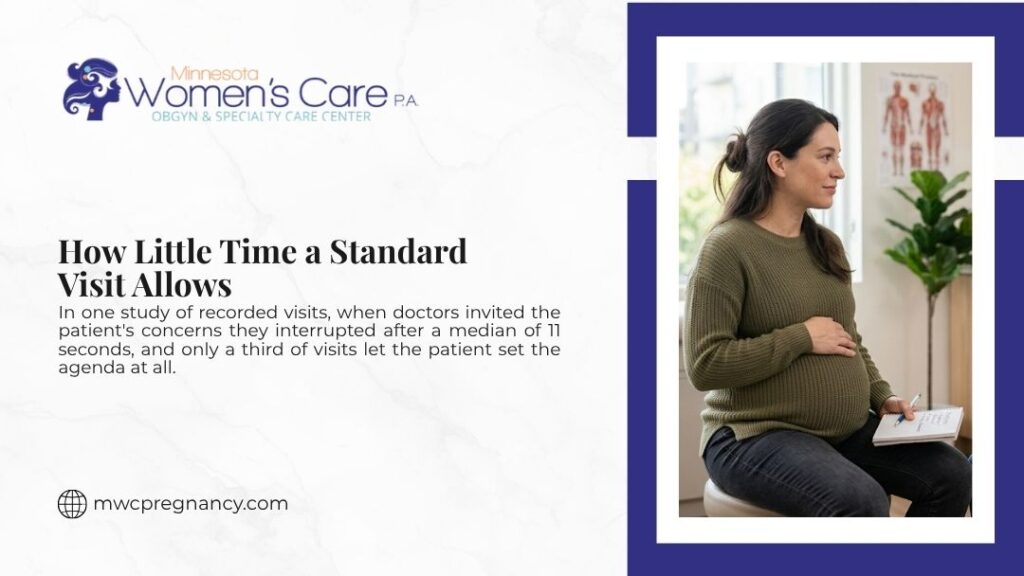
For first-time mothers, a concierge model can be worth it when the added access reduces fear and builds confidence. First pregnancies carry a steep learning curve; every symptom is new, every appointment introduces unfamiliar language, and every decision feels larger than expected.
A concierge OB can offer more time to explain what is normal, what deserves a prompt call, and what options are available. That tends to be especially valuable for women without nearby family support, those managing demanding careers, or those who feel anxious in the gaps between scheduled visits.
That said, first-time pregnancy alone does not make concierge care necessary. Many first-time mothers move through pregnancy confidently with standard OB or midwife care. The decision comes down to how much support the patient wants and whether the program’s added services match her actual needs.
Is a Concierge OB Worth It for High-Risk Pregnancy?
A concierge OB may help some patients with higher-risk needs, but it is not a substitute for maternal-fetal medicine or hospital-based specialist care. Pregnancies involving diabetes, hypertension, twins, placenta concerns, fetal growth issues, prior preterm birth, or autoimmune conditions will likely require specialist input regardless of care model.
Where concierge care can add real value is coordination and communication. A concierge OB may spend more time explaining results, helping the patient understand referrals, and keeping the overall care plan organized. That can reduce the emotional weight considerably.
Before committing, ask specific questions. Does the concierge OB work alongside maternal-fetal medicine specialists? Which hospital handles delivery? What happens if a higher level of care becomes necessary? Can the provider continue coordinating care if another specialist becomes more central to the pregnancy?
Worth it? Possibly, but only if the program genuinely supports the level of medical care the pregnancy requires.
Is Concierge OB Worth It for Low-Risk Pregnancy?
For low-risk pregnancy, concierge OB care can still be worth it if a patient values access, continuity, and time. Low-risk does mean no questions. It simply means fewer known medical concerns going in.
Some low-risk patients want a premium experience because careful preparation matters to them. They want birth-plan support, quicker answers, longer visits, and postpartum planning before the baby arrives. Others would rather direct that same money toward a doula, lactation support, newborn care help, or unpaid parental leave. There is no wrong answer. A good decision is the one that fits real life.
How Concierge Care Supports Postpartum Recovery
Postpartum care is often where a more personal model shows its greatest value. Many mothers feel closely watched during pregnancy, then suddenly under-supported after birth. That gap matters more than most people anticipate.
The CDC emphasizes that attending postpartum visits and recognizing urgent maternal warning signs can help prevent severe pregnancy-related complications, and that timely, respectful care plays a direct role in reducing maternal mortality.
A concierge OB program that takes postpartum seriously can help mothers plan for recovery before the baby even arrives. That may include mood screening, blood pressure awareness, pelvic floor symptoms, breastfeeding support, contraception, incision or tear healing, sleep disruption, and warning signs that need prompt attention.
MWC Pregnancy’s postpartum care services address this need directly, with attention to physical recovery, emotional well-being, newborn support, and family planning. For many mothers, the worth of concierge OB is not felt most during pregnancy. It is felt at two weeks postpartum, when the body is still healing, the baby is cluster-feeding, and someone finally asks how the mother is actually doing.
Common Myths About Concierge OB Care
One persistent myth is that concierge OB care is only for wealthy families or public figures. In practice, patients choose it for many different reasons: demanding schedules, prior birth trauma, medical complexity, anxiety, or simply wanting more control over their care experience.
A second myth is that concierge care guarantees a better birth. It does not. Birth changes quickly, and medical needs shift without warning. A cesarean, an induction, a specialist referral, or an unexpected hospital plan may still become necessary. The value of concierge care is not guaranteed outcomes; it is better support through the decisions and changes along the way.
A third myth is that choosing concierge OB implies standard care is inadequate. That is not fair to the many excellent traditional OB and midwife teams practicing today. Concierge OB is simply a different model, for patients who want or genuinely need more access.
Concierge Gynecology vs Concierge OB: Why the Distinction Matters
Concierge gynecology and concierge OB care can overlap, but they serve different needs. Concierge gynecology tends to focus on annual exams, hormone concerns, birth control, menopause care, sexual health, pelvic pain, and long-term prevention. Concierge OB focuses specifically on pregnancy.
For patients who are pregnant or planning to become pregnant, the relevant question is not simply “is this a concierge practice?” The better questions are: Does this provider offer prenatal care, delivery coordination, and postpartum follow-up? Do they have hospital affiliation? How do they handle pregnancy-specific questions and urgent concerns?
Patients who are still in the planning stage may also benefit from MWC Pregnancy’s guidance on carrier screening before and during pregnancy, the kind of early guidance that makes pregnancy feel less rushed once the test turns positive.
Questions to Ask Before Choosing a Concierge OB
Before joining any concierge program, ask the practice to explain the model in plain terms. Ask what the fee covers, what it does not cover, and what still goes through insurance. Ask how often visits happen, who answers calls and messages, whether the physician attends delivery, and what happens when the provider is off-call or unavailable.
Ask how the program handles urgent symptoms after hours. Ask whether same-day appointments are guaranteed or only offered when the schedule allows. Ask whether postpartum care is included and how long it continues. Ask how the program handles NIPT conversations, carrier screening, ultrasound review, and birth planning.
A strong practice will welcome every one of those questions. Pregnancy is not the time for vague reassurances. Patients who want to understand the people behind the care can meet the full MWC care team. Those with common early questions can also visit MWC Pregnancy’s FAQs.
How to Decide Whether Concierge OB Is Right for You
| You may value Concierge OB if… | You may prefer standard care if… |
| You want longer visits, and fewer rushed conversations | You are satisfied with routine appointment lengths |
| You want more direct communication between visits | You are comfortable with standard office messaging systems |
| You have anxiety, a prior loss, or complex concerns | You feel confident and well-supported in your current care |
| You want a physician-led premium care experience | You prefer team-based OB or midwife-led care |
| You want deeper postpartum planning before delivery | You already have strong support systems in place after birth |
The best answer is personal. What feels unnecessary to one woman may feel deeply reassuring to another. A care model that fits your real life will always serve you better than one chosen because the name sounds right.
FAQs About Concierge OB Care
What is a concierge OB?
A concierge OB is a pregnancy-care provider or program offering added access, longer visits, direct communication, and more personalized prenatal and postpartum support for a separate fee or premium-care arrangement.
What is concierge medicine?
Concierge medicine is a healthcare model where patients pay an added fee for enhanced physician access, longer appointments, more direct communication, and more personalized attention from a doctor or practice.
What is a concierge doctor?
A concierge doctor is a physician who offers a membership-style or premium-access care model. The patient typically pays for more time, easier scheduling, and more personal communication than a standard practice provides.
Is concierge medicine worth it?
Concierge medicine is worth it when the added access, time, and personalized care solve a real problem for the patient. It may not be worth it when the cost is high, the service description is vague, or standard care already works well.
Is a concierge OB the same as a private doctor?
A concierge OB may feel similar to a private doctor because patients generally receive more direct access and personal attention. The exact model depends on the practice, the fee structure, and the services included.
Does concierge OB care replace insurance?
Usually, no. Most concierge OB programs do not replace insurance. Labs, ultrasounds, hospital delivery, anesthesia, prescriptions, and specialist care typically still bill separately through insurance.
How do I know if Concierge OB is right for me?
Concierge OB may be the right fit if you want more access, more time, and a closer relationship with your pregnancy-care provider throughout prenatal care and delivery. It may not be right if the cost creates financial stress or your current care already feels responsive and complete.
Conclusion: A More Personal Pregnancy Care Choice
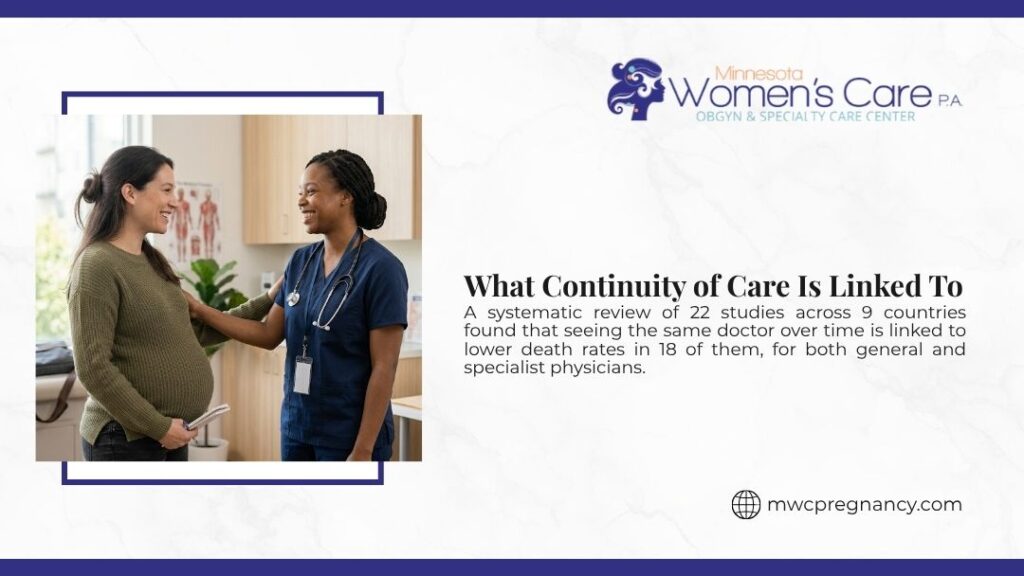
A concierge OB is a premium maternity-care option that gives expecting mothers more direct access, longer visits, closer guidance, and a more tailored care experience. It can be worth it for women who want extra reassurance, flexible support, stronger continuity, and genuine time with a trusted provider. It may not be worth it if the fee is unclear, the benefits are vague, or standard care already meets your needs.
Pregnancy is personal. Care should feel that way, too. Start with a visit where your questions, your birth preferences, and your care options all have room on the table, and where no one is watching the clock while you are still mid-sentence.
MWC Pregnancy offers OB care, midwife care, and Concierge OB across four locations serving Maplewood, Woodbury, Apple Valley, Hudson, and the wider Twin Cities and western Wisconsin region, so patients can compare options and choose the path that fits their body, their baby, and their life.